What this is, and what it isn't.
This site documents specific, sourced concerns about how a US-registered nonprofit is publicly representing its work, its technology, and its impact to donors.
This is not an allegation of fraud. Marici is a real, registered 501(c)(3) charity (EIN 82-1536804), tax-exempt since September 2017, with eight years of public IRS Form 990 filings, identifiable officers, and operational presence in Asia. The organization appears to be conducting genuine anti-trafficking work and has Silicon Valley supporters who speak publicly in its defense.
This is a request for substantiation. Marici's public-facing materials make a series of extraordinary, specific, and falsifiable claims — about artificial intelligence systems, about the scale of its operational impact, and about the relationship between donor dollars and the lives those dollars are said to save. Those claims appear without the public technical, methodological, or independent third-party documentation that ordinarily accompanies impact statements of this magnitude.
This site publishes Marici's claims, in their own words and verbatim from the sources they themselves chose, alongside what is and is not publicly verifiable. It exists because donors making decisions about where to direct charitable dollars deserve to make those decisions on the basis of evidence.
Pick your entry path.
The same record, organised three ways for the three kinds of reader who arrive at this site.
Start with the donor math.
The cost-per-life reconciliation, the donor-tier review, and the practical guide to evaluating any nonprofit's impact claims.
For Donors →Start with the AI claims.
The technical due-diligence review of the “50 AI tools,” “world's most sophisticated AI,” and “80%+ predictive mapping” claims, with a public-disclosure footprint comparison against Thorn, Polaris, and NCMEC.
AI Analysis →The raw evidence, in one place.
EIN, audited financials, claim summary, the unanswered open letter, complaint channels for the California Attorney General, the IRS-EO, and state AGs — with pre-drafted email bodies.
For Regulators →The numbers do not reconcile.
A central concern: the relationship between Marici's stated cost-per-life-saved and its publicly reported financial scale.
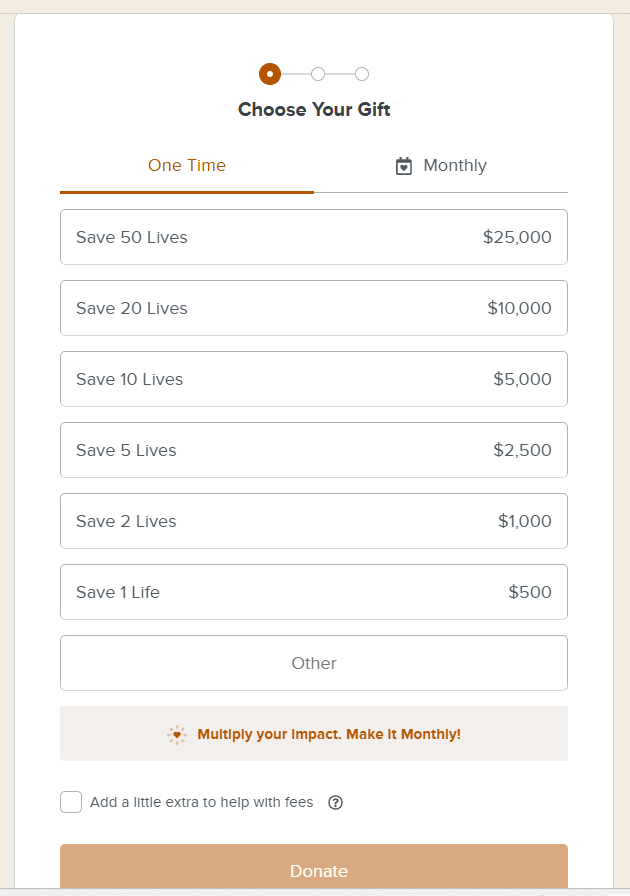
If Marici's claims are taken at face value, here is the arithmetic.
If Marici saves 39,000 lives at a total annual cost of $5.48 million, the true cost per life is approximately $140 — not $500.
Either: (a) the donor-page ratio overstates the cost per life by roughly 3.5×; (b) the impact figure is overstated; or (c) “saved” refers to something materially different from the rescue or intervention donors would reasonably understand. The three claims cannot all simultaneously be true as donors are likely to interpret them.
This is the central donor-transparency question. It is asked here without conclusion as to which of (a), (b), or (c) applies. Marici has not yet responded.
Recent updates to the review.
Every substantive change to this site is logged with a date. The most recent three entries appear below; the full audit history is on the sources page.
- update Added a Federal-grant trail section to /for-regulators/ (USASpending and Federal Audit Clearinghouse return zero records for Marici / Take Her Back), per-claim Open Graph share images, an old-anchor redirect for /claims/#claim-NN, an Astro <Image>-served donation-tier screenshot, datePublished/dateModified JSON-LD on the remaining pages, and reader controls in the footer (dark mode, reduce italic accent, dyslexic-friendly font, plus a reduced-motion preference).
- update Published a new claim-escalation timeline and a product-registry trail. The timeline reconstructs, from archived Wayback snapshots of marici.org, when each expansive AI claim entered Marici's public-facing copy. The product-registry section records the result of dated searches across USPTO, SEC EDGAR, npm, PyPI, Hugging Face, GitHub, and USASpending.
- update Migrated the eight reviewed claims, the changelog, and the new glossary to typed Astro content collections. Each claim now has a dedicated permalink, an inline archive.org snapshot link, an explicit verdict line, and a standing right-of-reply footer.